Serving Redlands, CA and surrounding areas. (909) 488-7993
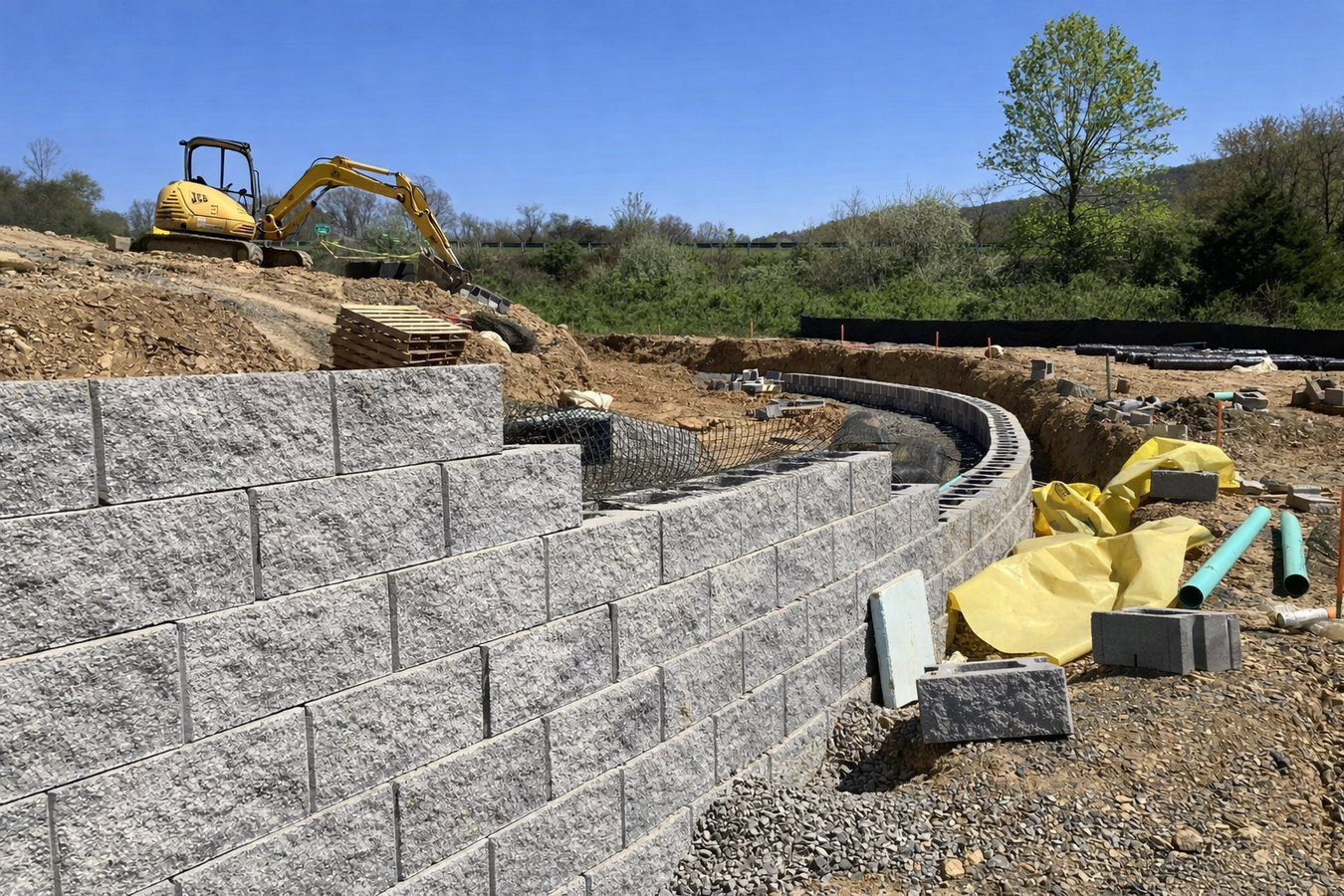
A sloped yard that washes away every winter or a wall that is starting to lean are problems that get worse every rainy season. We build retaining walls for Redlands foothill lots - designed for clay soils, seismic forces, and the heavy winter rains that test them hardest.
Retaining wall construction in Redlands, CA means building a permanent barrier to hold soil in place on a sloped or uneven lot, with most standard residential walls completed in two to five days once permits are approved. The wall stops soil from sliding, controls where water goes after a storm, and can turn an unusable hillside into a flat, functional part of your yard. Redlands foothill neighborhoods have some of the most active demand for this work in San Bernardino County because so many lots are terraced and the clay-heavy soils push hard against anything in their path.
The most common reason walls fail in this area is not the material - it is drainage. Water that builds up behind a wall with nowhere to go will eventually push it outward, crack it, or undermine its base. Every wall we build includes gravel backfill and drainage outlets so water moves through rather than accumulates. If your property also has bare masonry that has aged alongside your wall, our masonry restoration team can assess and repair the surrounding surfaces at the same time.
If you notice soil moving downhill after a storm - leaving bare patches, filling your driveway with dirt, or piling against your fence - your slope is eroding. Redlands gets most of its rain in short, intense winter bursts, which accelerates this kind of erosion on unprotected slopes. Left alone, the problem gets worse each season.
A retaining wall that is tilting away from the slope or showing horizontal cracks is under more pressure than it can handle. This is especially common in Redlands foothill neighborhoods where expansive clay soils push harder during wet winters. A leaning wall will not fix itself - it will eventually fail, and the damage it causes is far more expensive than replacing it now.
If part of your yard is too steep to mow, plant, or let children play on, a retaining wall can convert that wasted slope into a flat, usable terrace. Many Redlands homeowners with hillside lots have added garden beds or level outdoor living areas this way. It is one of the few improvements that adds both function and curb appeal at the same time.
When a slope sends water toward your house instead of away from it, that moisture can work its way into your foundation over time. Standing water near your home after rain, or damp spots along a lower wall, mean the grade is pointing water the wrong direction. A retaining wall combined with proper drainage can redirect that flow before it causes real damage.
We build retaining walls in concrete block, natural stone, and poured concrete, matching the material to your slope, budget, and what the surrounding property looks like. Concrete segmental block is the most common choice for Redlands residential lots - it is strong, handles seismic forces well, and comes in finishes that blend with most home styles. Natural stone walls are a better fit for properties where the rustic texture of fieldstone or granite suits the landscape, and they pair naturally with the older homes and mature gardens common in the historic neighborhoods near downtown. Every wall we build includes compacted gravel backfill and drainage outlets - not as an upgrade but as a standard part of the job.
For larger projects that involve both a wall and a paved surface at the base or top, concrete block walls can be combined with a driveway or patio to create a finished, unified grade change. If your slope project also involves an older decorative or structural masonry wall alongside a new wall, our masonry restoration work can bring the existing surfaces up to match, so the finished yard looks like one planned project.
Best for most Redlands residential lots - strong, seismic-rated, and available in finishes that complement a wide range of home styles.
Suits properties with mature gardens or historic-character homes where the texture of fieldstone or granite fits the setting better than manufactured block.
Ideal for steeply sloped foothill lots where a single tall wall is not practical - multiple shorter walls create usable level areas at each tier.
A significant portion of Redlands homes sit on sloped lots in the foothills north of the city center, where terraced yards and retaining walls are common features of the landscape. That hillside terrain combined with the expansive clay soils common throughout the San Bernardino Valley creates consistent demand for this work - and consistent consequences for homeowners who delay. Redlands also sits within a seismically active part of Southern California, with several fault systems in the broader Inland Empire. A wall that is only designed to hold back the weight of soil may not perform the same way when the ground shakes, and taller walls here often require a licensed engineer to review the design before construction begins.
Homeowners in Highland and Grand Terrace deal with the same hillside and clay soil conditions we work with daily in Redlands. Fall through early spring is generally the best window to schedule wall construction - cooler temperatures help concrete and mortar cure more evenly, and finishing before the winter rains means the new drainage is in place before the slopes are tested. Planning a few months ahead gives you access to the best crews before demand peaks.
We ask about the height of the drop, whether there is an existing wall, and what you want the yard to look like afterward. We respond within 1 business day and come out to see the slope in person - a retaining wall quote based only on a phone call is rarely accurate.
We assess the soil, slope angle, available workspace, and nearby utilities or structures. You get a written estimate covering labor, materials, drainage, and permit fees. For walls over four feet, we include the cost of pulling the City of Redlands permit - no surprises after you sign.
We submit the permit application and wait for city approval before the crew arrives - typically one to three weeks. Construction for a standard residential wall takes two to four days. Gravel backfill goes in behind the wall as it rises, not after, so drainage is built into every layer.
If a permit was required, a city inspector checks the wall before final backfill is placed. Once the inspection passes, the crew grades the soil behind the wall and hauls away debris. We walk through the finished wall with you before leaving and explain what normal settling looks like.
We come to your property, look at the slope and soil, and give you a written quote that covers everything - materials, labor, drainage, and permits.
(909) 488-7993Every wall we build includes compacted gravel backfill and drainage outlets sized for the slope. This is not an add-on - it is how we build every wall, because water pressure behind a wall is the number-one reason retaining walls fail in Redlands wet winters.
Redlands foothill neighborhoods have their own soil and slope conditions. We have worked on terraced lots across the north side of the city and understand the excavation depth, footing design, and drainage routing those properties need. A contractor who has not worked in Redlands foothills will be learning on your project.
The City of Redlands requires permits for walls over a certain height, and San Bernardino County sits in a seismically active zone where taller walls need engineer review. We handle the permit application and coordinate any engineering review so you do not have to navigate those processes on your own.
We stand behind our work with a written warranty and are reachable if questions come up after the crew leaves. The Mason Contractors Association of America sets best practices for wall construction - we build to those standards and are available to explain our work at any stage of the project.
Redlands slopes and soils reward walls that are built right the first time and punish shortcuts within one to three rainy seasons. We bring the same local knowledge to every job, and we put it in writing so you have something to stand behind if anything ever changes.
The National Concrete Masonry Association publishes design standards for segmental retaining walls used by contractors and engineers across the country. The California Geological Survey provides resources on seismic hazards and expansive soil conditions that affect retaining wall design throughout the Inland Empire.
Repair and restore aging masonry surfaces alongside your new retaining wall for a finished, cohesive result.
Learn MoreCombine a boundary block wall with your retaining wall project to define the property line and hold the slope at the same time.
Learn MoreThe best time to build is before the winter rains arrive. Call today for a free on-site estimate and lock in your project start date before the season gets away from you.