Serving Redlands, CA and surrounding areas. (909) 488-7993
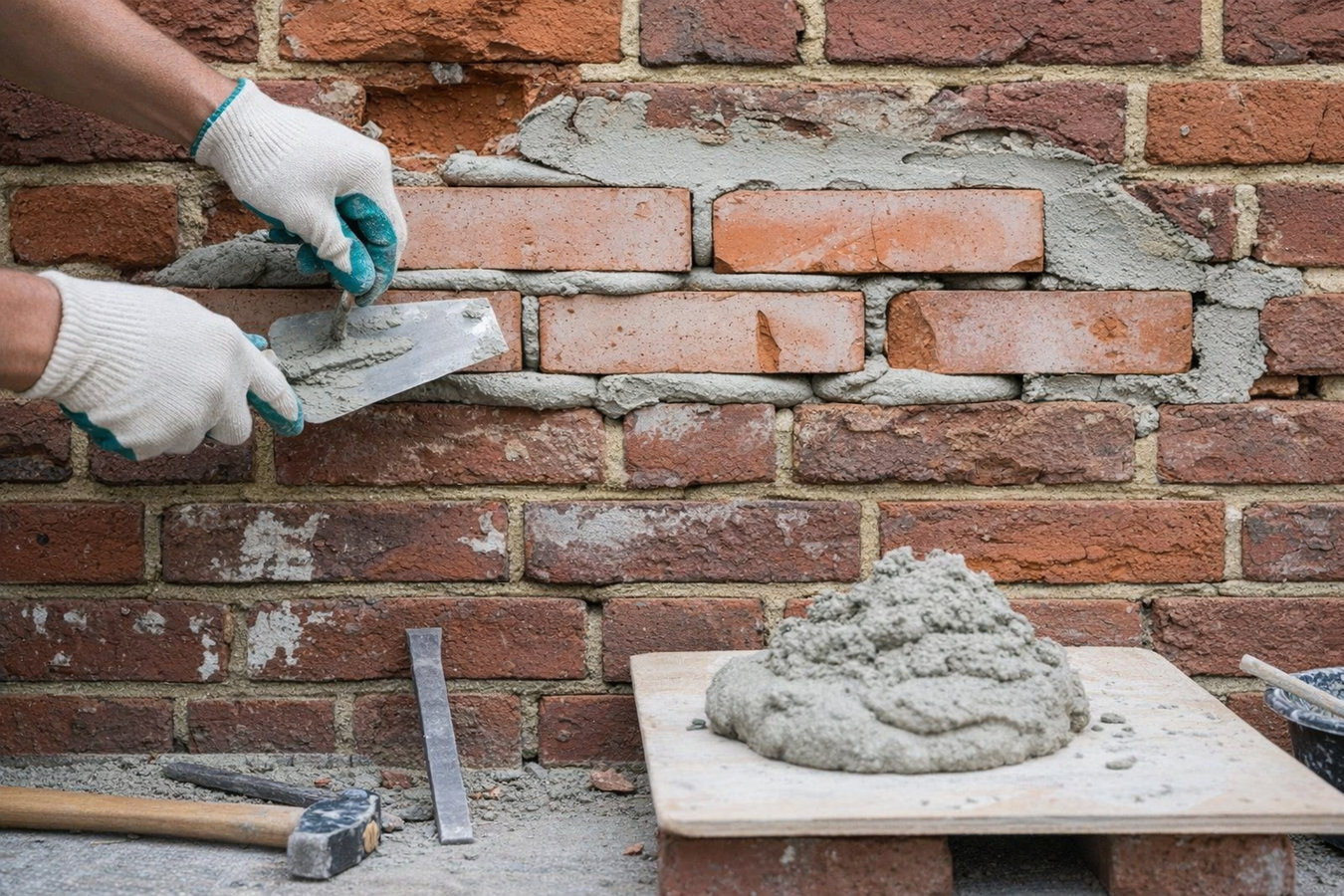
Cracked bricks and crumbling mortar let water into your walls. We fix the damage, match the materials, and leave your masonry solid before the next heat wave or rainy season.
Cracked bricks and crumbling mortar let water into your walls. We fix the damage, match the materials, and leave your masonry solid before the next heat wave or rainy season.
Brick repair in Redlands covers replacing cracked or crumbling bricks, refilling worn mortar joints, and stabilizing sections of wall or chimney that have shifted - most straightforward jobs are completed in one day without requiring you to leave your home.
Most homeowners are surprised to learn that the mortar between bricks often needs attention long before the bricks themselves do. Mortar is designed to be the softer material - it absorbs movement and moisture so the bricks stay intact. In Redlands, the combination of summer heat regularly above 100 degrees, dry Santa Ana winds, and clay soils that expand and contract with the seasons puts mortar joints under more stress than in most other California climates. If you have noticed white staining, soft or crumbly joints, or any diagonal cracks, brick repair stops the problem before it reaches your wall framing. When the mortar has already failed and multiple joints need attention, our tuckpointing service addresses the full scope in one pass.
Redlands has one of the highest concentrations of pre-1940 brick homes in Southern California, built during the citrus boom when Victorian and Craftsman construction was the standard. Lime-based mortar from that era is well past its designed service life on most of those properties. Even mid-century stucco homes here often have brick chimneys, planters, or accent walls that see the same wear. A quality repair, done with mortar matched to your existing masonry, should hold for 20 to 30 years.
Chalky white streaks or patches on your brick walls, chimney, or planter mean water has been moving through the masonry and leaving mineral deposits on the surface. In Redlands, this often shows up at the base of walls where irrigation overspray hits repeatedly. It is not just cosmetic - it signals that moisture is getting in and the mortar joints are likely the entry point.
Run your finger along the lines between your bricks. If the mortar feels sandy, crumbles easily, or you can dig into it with a key, it is past due. Redlands summers and dry Santa Ana wind seasons dry out mortar faster than in cooler, more humid climates - older homes here often have joints that are overdue even if nothing looks alarming from the street.
Hairline cracks in mortar are normal aging. But cracks that run diagonally across multiple bricks, or that are wide enough to slip a coin into, suggest the wall has shifted or settled. This is worth having a mason look at promptly - small cracks let water in, and water damage compounds quickly through Redlands winters.
Stand back and look at your brick wall from an angle. If any section appears to bow outward, or individual bricks have shifted out of their original position, the mortar holding them in place has failed. In Redlands older neighborhoods, this sometimes appears on retaining walls and garden planters before it shows on the main house walls - either way it needs attention before the section becomes unstable.
Our brick repair work covers the full range of common masonry problems - mortar joint repointing, brick replacement, chimney crown repair, and stabilizing sections of wall or planter that have shifted. For every job we match the mortar color and texture to your existing joints so the repair blends in rather than standing out. We also assess whether any bricks need to be replaced rather than just repointed, and source matching units as closely as possible. If your home is in or near the Redlands historic district, we are familiar with the design review considerations and can confirm what applies to your address before work starts. When the damage extends beyond the brick surface to the driveway approach or adjoining flatwork, our driveway pavers service addresses that as part of the same project.
For pre-1950 Redlands homes, we test the existing mortar before mixing any replacement material. Using modern hard Portland cement on a wall built with soft lime-based mortar forces stress into the brick face instead of absorbing it, which causes the bricks themselves to crack over time. The repair needs to match the original mix in softness and flexibility - this is one of the most important and most frequently skipped steps on older homes. If the job is limited to specific joints rather than widespread wall repair, we also offer targeted tuckpointing work.
Suits homes where mortar joints are crumbling, recessed, or showing efflorescence - the most common brick repair need in Redlands.
Suits walls where individual bricks have cracked, spalled, or shifted out of position and need to be removed and replaced with matching units.
Suits homeowners with chimneys that have not been inspected in years - the most exposed masonry on your home and the first place wear shows.
Suits pre-1950 homes in Redlands historic neighborhoods where the original lime-based mortar must be replicated to protect the brick and meet preservation guidelines.
Redlands grew rapidly during the citrus boom of the late 1800s and early 1900s, and many of those original brick homes are still standing - particularly in the Smiley Heights and South Redlands neighborhoods and around the downtown core. Mortar from that era was made with lime-based mixes that, while durable, have had a century or more to dry out and erode. The Inland Empire's heat cycles, with temperature swings of 60 to 70 degrees between summer days and winter nights, accelerate the expansion and contraction that opens mortar cracks. The dry Santa Ana winds that blow through Redlands each fall pull moisture out of joints faster than in coastal climates, speeding up surface erosion. And unlike most California cities, Redlands homeowners also contend with clay soils that expand and contract with seasonal moisture changes - one of the most consistent causes of cracked driveways, shifted planters, and stressed brick walls over time.
We work throughout the Redlands area and the surrounding communities. Homeowners in Colton, CA and Loma Linda, CA face the same clay soil conditions, heat cycles, and older housing stock that make brick repair a recurring need across the Inland Empire. Spring and fall are the best seasons to schedule - mortar cures properly when temperatures are between 50 and 90 degrees, and both seasons give you good working windows in this climate.
We ask where the damage is, roughly how old the home is, and whether you have noticed any water inside. Most jobs get a free on-site estimate within one business day. You do not need to prepare anything - just be available to walk us around the areas you are concerned about.
We look closely at the damaged areas, check the mortar joint condition, and assess whether bricks need replacing or just repointing. We also look for signs of a deeper problem - like a foundation shift - that might need to be addressed alongside the brick repair. You get a written quote with a breakdown of what is needed and why before work starts.
The crew removes damaged mortar using hand tools or a small grinder, then packs in fresh mortar matched to your existing joints. If bricks are being replaced, we source matching units as closely as possible. Most jobs wrap up in one day, though larger repairs may run into a second day. Dust and debris are normal - we lay tarps and clean up before leaving.
Before we leave, we walk the completed repair with you and point out what was done. Fresh mortar needs 24 to 48 hours before it gets wet and up to a week before full strength - keep sprinklers away from the repaired area during that time. We will also flag any other areas to watch so you can plan ahead rather than scramble after the next heat season.
Written quote before work starts, no obligation, and straight answers about what your brickwork actually needs.
(909) 488-7993Redlands has a large stock of historic brick homes where using modern Portland cement mortar causes more damage than it fixes. We test the existing mortar and match the replacement mix to the original softness - protecting the brick face rather than cracking it. This is one of the most important and most frequently skipped steps on older homes.
You get a written, itemized quote that explains in plain language what each part of the job involves and why it is needed - before anyone picks up a tool. No vague estimates that balloon once work starts, and no pressure to approve work you do not understand.
One of the most common complaints homeowners have after brick repair is mortar that looks obviously patched. We test a sample patch and let it cure before doing the full job, so you can see the color match before we commit to the whole repair. The Brick Industry Association recommends this step on any repair where appearance matters - and on historic Redlands homes, it always does.
We hold a California C-29 Masonry Contractor license, verifiable in seconds on the CSLB website. That lookup tells you whether we are active, bonded, and whether any complaints have been filed - a 30-second check that gives you a meaningful baseline before inviting anyone onto your property.
Working in Redlands means understanding what older brick needs, what the Inland Empire climate demands, and how to navigate historic district considerations when they apply. Those details are not things you can learn from a general masonry manual - they come from doing this work here, on these homes.
When clay soil movement has cracked adjoining flatwork alongside your brick repairs, we install durable paver systems that flex with the ground.
Learn MoreFull mortar joint removal and repacking across an entire wall or chimney when widespread wear calls for more than targeted brick-by-brick repairs.
Learn MoreMost jobs can be scheduled within the week - get a free written estimate today and know exactly what the repair will cost.