Serving Redlands, CA and surrounding areas. (909) 488-7993
Redlands Masonry & Concrete provides retaining wall construction, concrete block walls, and chimney repair throughout Highland, CA. We have been serving the Inland Empire since 2017 and respond to new requests within one business day.
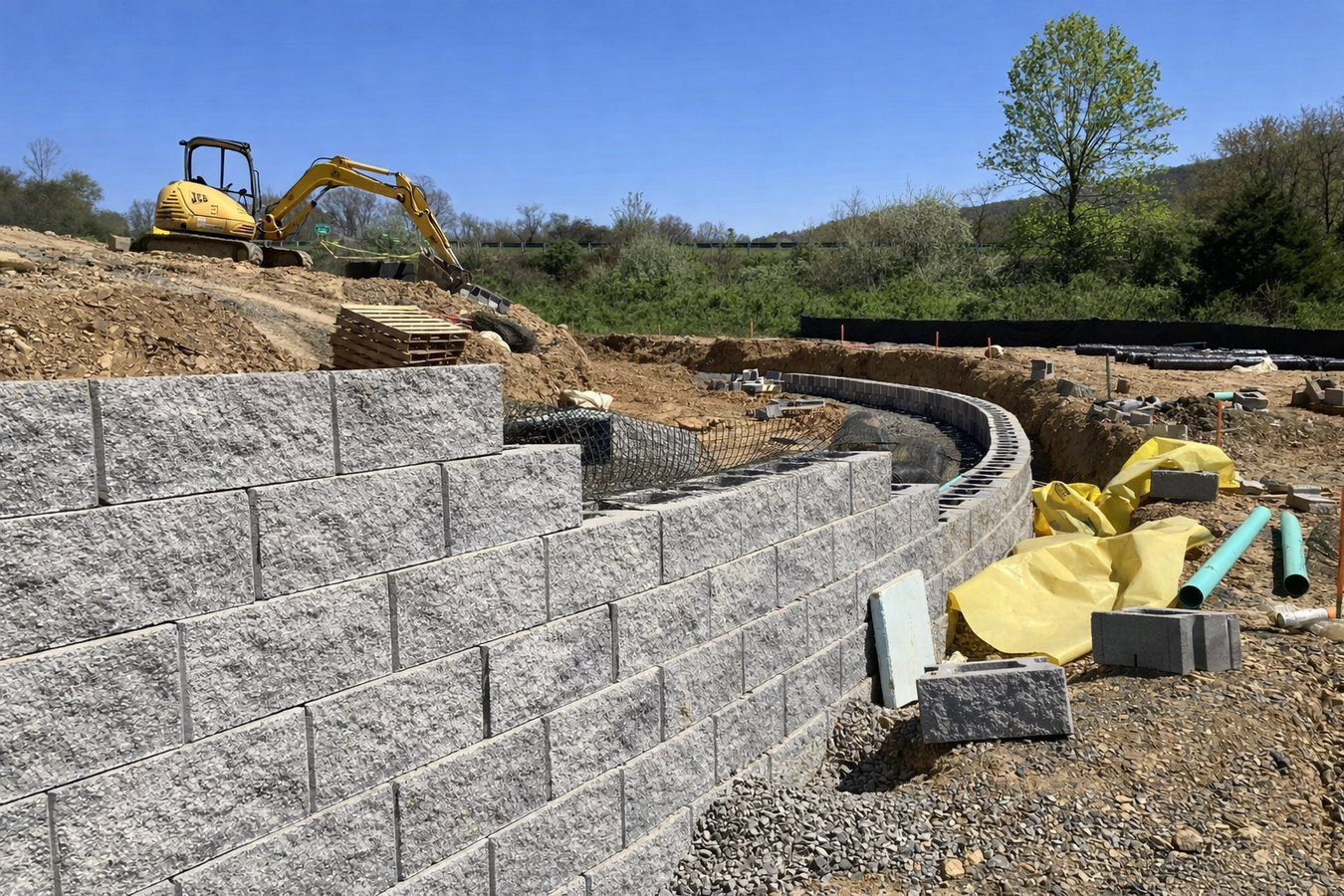
Highland has a lot of sloped lots, especially in the foothill neighborhoods and in East Highland Ranch, where terraced yards and raised planting beds are the norm. Expansive clay soils underneath those slopes move with the seasons, and a retaining wall built without proper drainage and footing depth will crack and lean within a few years. See our retaining wall construction service.
Block walls are one of the most common features on Highland properties, used for property boundaries, privacy screens, and garden borders. Because Highland sits in a seismically active area, block walls here need steel reinforcement through the cores - a requirement that separates a wall that lasts from one that cracks in the first strong shaking event.
Homes near Highland's foothills use their fireplaces regularly during cooler months, and chimneys here face the added stress of Santa Ana wind events every fall. Those dry, fast winds crack mortar crowns and loosen joints in a single season. An inspection after a major wind event can catch damage early, before water works its way in over winter.
Highland driveways take a beating from the combination of 100-degree summers and clay soils that shift underneath. Pavers handle that movement better than poured concrete because individual units flex slightly and can be reset if the ground moves, rather than cracking in long fault lines across the surface.
Most homes in Highland were built between the 1970s and early 2000s, putting original mortar joints at the age when they typically start failing. Highland's extreme summer heat dries mortar faster than coastal climates, accelerating that process. Repointing failed joints before they recess fully stops water from working behind the masonry.
Older homes in Highland near Base Line Street and the original city neighborhoods have brick and block features that have been through decades of Inland Empire heat cycles. Restoration work on these structures requires matching original materials and using repair methods that work with aging masonry, not against it.
Highland sits at roughly 1,200 feet elevation at the base of the San Bernardino Mountains, and that location shapes the demands on masonry here. The city's mix of foothill lots and flat valley neighborhoods means retaining walls, block walls, and paved surfaces deal with significant grade changes and clay-heavy soils that expand and contract with the seasons. Summer heat in Highland regularly tops 100 degrees, and the dry Santa Ana winds that arrive every fall put real stress on mortar joints, chimney crowns, and any exposed masonry surface. Concrete poured or mortared during the hottest part of summer needs careful management to cure correctly - if it dries too fast, the finished product becomes brittle.
Most of Highland's housing was built between the 1970s and early 2000s. At that age, original mortar joints on block walls and chimneys commonly reach the end of their useful life, and driveways built on clay subgrades have often shifted enough to need attention. Properties in East Highland Ranch, the city's master-planned community, tend to have larger lots with more hardscape - more block wall footage, longer driveways, and larger patios - so when those surfaces need work, the scope is typically bigger. Homes near the foothills also fall within the state's designated High Fire Hazard Severity Zone, which can affect material choices and what your insurer expects from your exterior.
Our crew works throughout Highland regularly, and we understand the local conditions that affect masonry contractor work here. We pull permits from the City of Highland when retaining walls or structural block walls require them, and we know which projects typically need design review versus which can proceed without one.
We work on homes throughout the city - from the older neighborhoods near Base Line Street and City Hall to the newer streets out in East Highland Ranch near the community trails and parks. The soil conditions, lot grades, and housing ages are different in each part of the city, and we adjust how we design footings and drainage based on what is actually under the ground at each property.
We also cover neighboring areas on the same work schedule. Homeowners in San Bernardino directly to the west are served regularly, and we are equally familiar with the older housing stock and concrete slab foundations that are common across that city.
We respond within one business day. When you reach out, a brief description of what you are seeing - a leaning block wall, cracked mortar on a chimney, a shifting driveway - helps us prepare the right questions before we visit.
We visit your Highland property, assess the condition, and give you a written estimate before any work begins. The estimate is free, and we will flag any permit requirements at this stage so there are no surprises once work starts.
We handle permit applications when required and schedule work around Highland's temperature extremes - avoiding pours in peak summer heat when possible. You do not need to be present for most jobs, but we communicate clearly about site access and timing.
We walk you through the finished work before we leave and let you know what to watch for after the first rain - a small amount of settling is normal, but we want to hear from you if anything looks off. Standing behind the work is part of the job.
We serve Highland homeowners from East Highland Ranch to the neighborhoods near Base Line Street. Call or submit a request and we will respond within one business day.
(909) 488-7993Highland is a city of about 55,000 people in San Bernardino County, incorporated in 1987 and situated at the base of the San Bernardino Mountains at roughly 1,200 feet elevation. The city stretches from older neighborhoods near Base Line Street in the west to the master-planned community of East Highland Ranch in the east, where homes are newer, lots are larger, and the community has its own parks and trail network. The San Bernardino National Forest begins at the northern edge of the city, which gives residents quick access to mountain recreation but also puts foothill properties in fire hazard territory that shapes exterior material choices and insurance costs.
Most of Highland's housing stock was built during the suburban growth of the 1970s through the early 2000s - single-story and two-story tract homes with stucco exteriors, concrete tile roofs, block wall fencing, and attached garages. At 20 to 50 years old, many of these homes are now at the age where driveways crack, retaining walls start to lean, and mortar joints need attention. Highland borders San Bernardino directly to the west, a larger city with a similar housing profile and similar masonry needs. Homeowners in both communities deal with the same clay soils, seasonal heat, and aging materials that make regular masonry maintenance a practical necessity rather than an optional upgrade.
Restore structural integrity and stop foundation damage before it spreads.
Learn MoreControl erosion and grade changes with a durable retaining wall.
Learn MoreInstall a beautiful masonry fireplace that becomes a home centerpiece.
Learn MoreBuild strong, long-lasting walls using quality concrete block masonry.
Learn MoreSet a solid foundation with precisely installed concrete block walls.
Learn MoreCreate a custom outdoor kitchen built to last through every season.
Learn MoreConstruct classic brick walls for boundaries, privacy, or decoration.
Learn MoreWhether you need a retaining wall, block wall repair, or chimney work in Highland, we are ready to visit your property and give you a written estimate with no obligation.